

AI Visual SEO transforms how landing pages perform by optimizing images and videos for both search engines and users. It automates tasks like resizing, placement, and testing, ensuring visuals improve rankings, engagement, and conversions. Here's what you need to know:
- What It Is: AI analyzes user behavior to adjust visuals dynamically, ensuring the right content reaches the right audience.
- Why It Matters: Optimized visuals reduce load times, lower bounce rates, and improve search rankings by aligning with user intent.
- How It Works: AI handles tasks like alt text generation, schema markup, and dynamic personalization, creating visuals tailored to user behavior and device type.
- Key Benefits: Faster page loads, higher engagement, improved SEO, and personalized user experiences.
AI tools like Midjourney and Runway simplify visual creation, while platforms like Hello Operator provide tailored solutions to integrate AI into your workflow. Start by testing AI-driven optimizations on your landing pages and track results over time. The future of SEO lies in visuals that adjust automatically to every visitor's needs.
AI Techniques for Optimizing Images and Videos
AI is reshaping how we optimize images and videos, creating smarter, more effective strategies to boost landing page performance. By going beyond basic compression techniques, AI leverages machine learning to analyze context, predict user behavior, and deliver visuals that align with SEO goals. These advancements are transforming how search engines rank pages and how visitors interact with content.
Image Optimization with AI
AI simplifies image optimization by handling tasks like reducing file sizes, selecting the best formats, and generating alt text that naturally incorporates target keywords. Since search engines can't "see" images, they rely heavily on alt text to interpret visual content. AI-generated alt text doesn’t just describe the image - it provides context. For example, instead of a vague label like "red running shoe", AI might generate "lightweight red running shoe designed for marathon training." This approach improves accessibility for screen readers while giving search engines the detailed information they need.
AI also uses schema markup, specifically JSON-LD ImageObject, to connect images with the main content on the page. It evaluates whether an image aligns with the surrounding text, ensuring titles, captions, and alt text all reinforce relevant keywords. Another standout feature is AI-driven image recommendations. By analyzing engagement data, AI suggests visuals that resonate with your audience while staying true to your brand's style.
Video Optimization for Landing Pages
Videos are a powerful tool for increasing dwell time and improving search visibility. AI enhances video content by generating transcripts, captions, titles, descriptions, tags, and VideoObject schema markup. Transcripts and captions not only make videos more accessible but also turn spoken content into searchable text, helping search engines index video content more effectively.
AI also plays a role in determining where videos should appear on a page. For example, it often recommends placing videos above the fold to grab the attention of high-intent visitors. It analyzes audience behavior to suggest the ideal video length and format, ensuring maximum engagement. Additionally, AI ensures consistency in metadata, transcripts, and regional context across platforms, which helps maintain SEO value and builds trust with users.
Dynamic Personalization and Visual Adaptation
One of the most game-changing features of AI is its ability to personalize visuals in real-time. By analyzing user behavior, preferences, and device types, AI tailors the visual experience for each visitor. For instance, an e-commerce site might show product demos to users arriving through organic search, while visitors from social media see testimonial videos. It can even adapt visuals based on geographic location, offering region-specific imagery to make the experience more relevant.
AI-powered platforms take testing to the next level by running multiple visual variants simultaneously, bypassing the limitations of traditional A/B testing. These systems automatically serve the best-performing visuals to specific audience segments, ensuring higher engagement. AI also adjusts visual hierarchy, such as placing high-impact visuals above the fold and aligning call-to-action buttons with complementary imagery, creating an intuitive and engaging layout.
For mobile users, AI generates images in various sizes and formats to ensure they display perfectly on any device or screen resolution. It also guarantees responsive design and smooth functionality of interactive elements, making the experience seamless across platforms. This dynamic approach transforms landing pages from static showcases into adaptive systems that continuously learn and improve based on user interactions - boosting rankings and conversions along the way. These AI-driven techniques are redefining what’s possible in visual optimization.
Building Visual Hierarchies with AI
Visual hierarchy plays a crucial role in guiding visitors' attention and driving conversions. With the help of AI, layouts can be designed to naturally direct focus toward key actions by analyzing how users interact with a page.
Optimizing Layout and Placement
AI dives deep into user behavior, analyzing scroll patterns and identifying where visitors lose interest. Based on this data, it suggests layout tweaks aimed at keeping engagement high. By tracking how users interact with elements like headlines, images, forms, and buttons, AI offers actionable recommendations rooted in proven strategies for boosting conversions.
A key focus is on above-the-fold content - the headline, benefits, and primary call-to-action (CTA). When these elements are immediately visible and impactful, visitors are more likely to stay on the page, reducing bounce rates and signaling quality to search engines. AI-powered landing page tools take this a step further by analyzing user engagement to propose design templates and layouts tailored to your audience. These tools identify areas that naturally draw attention and strategically position critical elements, such as CTAs, in those high-impact spots - whether at the top, below the headline, or repeated at key scroll points.
This ongoing refinement of layouts, paired with adaptive visual strategies, ensures that pages evolve based on performance, continually improving their effectiveness.
Creating a Clear Visual Pathway
Once elements are strategically placed, AI organizes content into clear, easy-to-follow sections. Recognizing that most users skim rather than read every word, it structures pages to ensure essential information flows logically, reducing friction in the user journey.
AI also enhances visual appeal by recommending complementary color contrasts that maintain brand consistency while boosting visibility. For CTAs, it fine-tunes design elements such as placement, color, and typography, ensuring they stand out. By testing different combinations of text, design, and positioning, AI identifies the styles that generate the highest conversion rates.
A clutter-free design is another priority. AI advocates for layouts with a single, prominent CTA to avoid distractions caused by excessive secondary CTAs, redundant images, or unnecessary text. This streamlined approach creates a cleaner visual pathway, directing users' focus toward the primary goal.
When it comes to mobile optimization, AI addresses the unique challenges of limited screen space. It ensures responsive designs that adjust seamlessly across devices, keeping critical information - like headlines and CTAs - visible without requiring horizontal scrolling. On mobile, prioritizing above-the-fold content becomes even more important to capture attention instantly. AI evaluates how elements stack on mobile versus desktop, recommending layouts that maintain clarity and usability across platforms, which also supports SEO efforts.
To continuously improve visual hierarchies, AI employs A/B testing. By experimenting with variations in CTA placement, color schemes, typography, and imagery, it identifies winning combinations that resonate with users. This iterative process allows landing pages to evolve over time, with AI learning from each test to provide increasingly precise recommendations. The result is a dynamic, user-focused design that reinforces key conversion paths and adapts to changing user behaviors.
AI-Powered Tools and Platforms for Visual SEO
AI tools have revolutionized visual SEO, turning what used to be a complex and time-consuming process into something far more manageable. These platforms blend automation with smart recommendations, making high-level optimization accessible to marketers of all experience levels. The result? Tailored solutions that can elevate your visual SEO game.
Key Features of AI Visual SEO Tools
SEO-ready image generation is a cornerstone of visual optimization. These tools create visuals that are not only optimized for search engines but also align perfectly with your brand and messaging. By analyzing your industry, the AI ensures that the visuals resonate with your audience, going beyond just looking good.
Automated file compression is another game-changer. By reducing image sizes while preserving quality, AI tools help speed up page load times - a key factor in search rankings. Platforms like Landingi and Leadpages simplify this process, allowing marketers to handle compression and other technical tasks without any coding skills.
Analytics platform integration offers real-time insights into how visual elements impact user behavior. By linking visual optimization efforts to measurable metrics, these tools provide a clear picture of ROI, making it easier to justify investments in AI-powered solutions.
Dynamic personalization capabilities take customization to the next level. AI platforms can adjust visuals based on user behavior and intent, delivering a tailored experience that was once only achievable by large companies with specialized teams.
Drag-and-drop visual page builders make creating and optimizing landing pages straightforward. Marketers can design pages by rearranging sections in real-time, ensuring instant visual feedback. Pre-designed, reusable page sections help maintain a consistent look across all pages.
AI content generators simplify metadata creation by producing personalized meta titles, descriptions, and keywords based on your page content. These tools even offer Google preview formats, so you can see exactly how your visuals and metadata will appear in search results before publishing.
Structured data capabilities are crucial for ensuring search engines can properly index your visual assets. By implementing Schema.org standards like ImageObject and VideoObject, AI tools improve visibility in image searches and AI-driven features like Google's AI Overviews. This is especially important considering that 74% of shoppers trust businesses more when they see photos in search results, boosting clicks and conversions.
Accessibility features built into AI tools not only ensure compliance but also enhance SEO performance. Automated checks for color contrast, keyboard navigation, and ARIA labeling make visuals accessible to all users. AI-generated audio descriptions further assist screen readers and search engine crawlers in understanding image content.
A/B testing functionality allows for continuous improvement by refining visuals and layouts based on real-world performance data.
Hello Operator's Role in AI Visual SEO
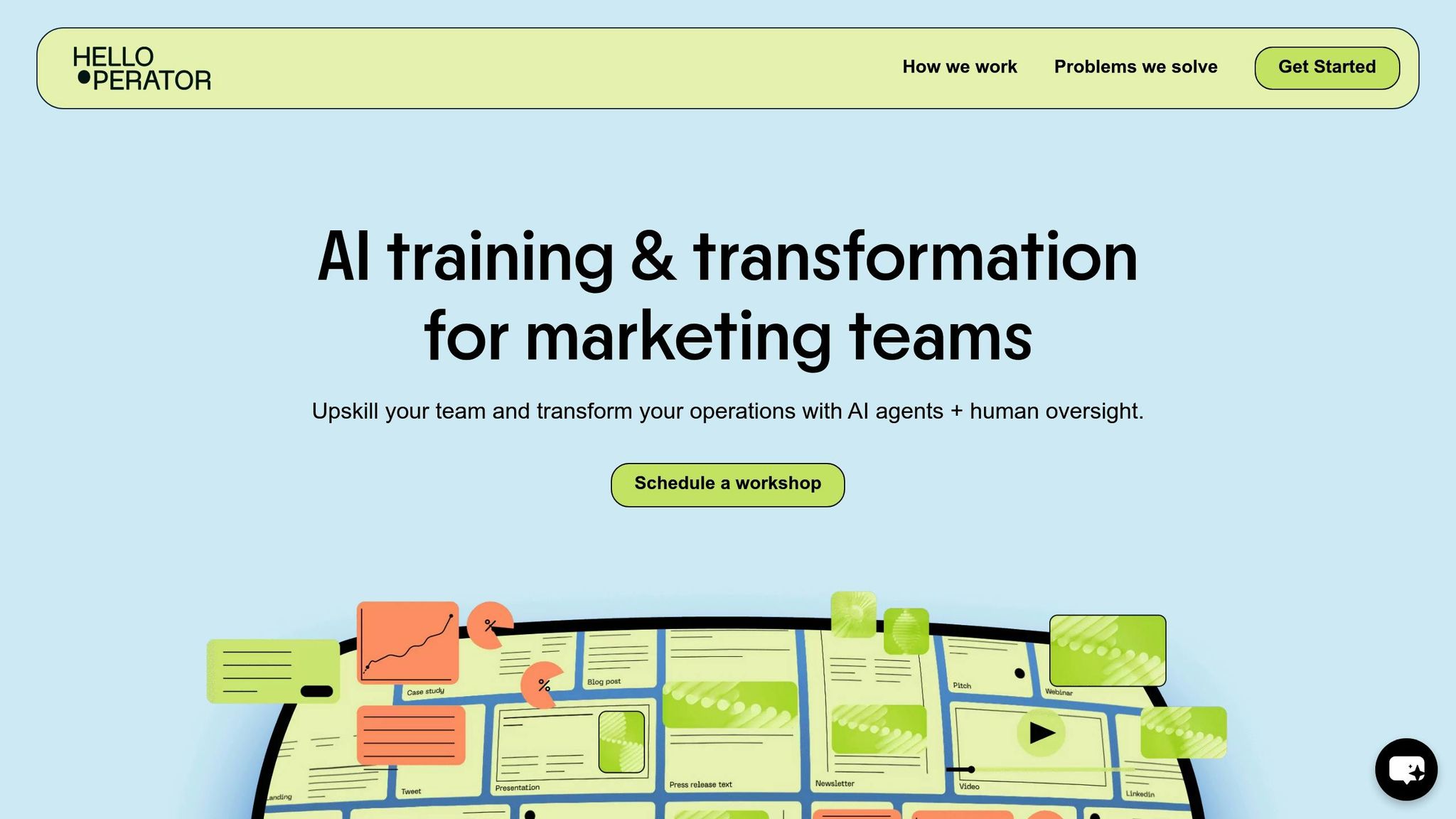
Hello Operator builds on these powerful AI capabilities by offering tailored solutions that turn visual SEO into a driver of growth. What sets them apart is their focus on customized AI marketing strategies.
Instead of providing a one-size-fits-all platform, Hello Operator develops bespoke AI tools tailored to your needs. For example, they can create visual personalization engines that adapt images and layouts for specific audience segments and conversion goals.
One common challenge they address is the steep learning curve of implementing advanced AI tools. Hello Operator bridges this gap by providing on-demand AI marketing specialists who handle repetitive tasks like image selection, compression, and metadata generation. This allows your team to focus on strategy and creativity rather than technical details.
Their solutions integrate seamlessly with your existing tech stack. Whether you need dynamic image selection based on proprietary data or visuals tailored to a specific industry, Hello Operator can build it. Their project-based approach includes strategic planning, custom AI applications, and AI agents trained on your data, all overseen by a dedicated project manager.
To ensure your team can fully leverage these tools, Hello Operator offers hands-on AI marketing workshops. These sessions are customized to address your specific challenges, helping your team build the skills needed to work effectively with AI tools and interpret the insights they generate. For businesses new to AI or looking to enhance their in-house capabilities, this training is invaluable.
Their approach combines the strengths of AI with human creativity. While AI excels at optimization and data analysis, human insight is essential for aligning these efforts with your brand identity and business goals. This ensures that AI-driven recommendations enhance both SEO performance and user engagement. Hello Operator also helps foster a collaborative AI culture within organizations, encouraging teams to see AI as a tool that complements their expertise rather than replacing it.
For small and medium-sized businesses (SMBs), Hello Operator offers flexible plans. Their ongoing and on-demand services start at $3,750 per month, providing access to AI marketing specialists without the cost of hiring multiple experts. For businesses ready to overhaul their workflows with AI-led processes, their project-based option at $5,950 per month delivers enterprise-level capabilities while maintaining human oversight. This makes advanced visual SEO tools accessible to organizations that might not otherwise afford such resources.
sbb-itb-daf5303
Best Practices for AI-Driven Visual Optimization
To make the most of AI in visual SEO, it's all about striking the right balance: automation and brand identity, technical performance and user experience, quick updates and maintaining quality. These approaches ensure your visuals not only stand out but also work seamlessly with your site's overall performance.
Creating High-Quality, Relevant Visuals
Visuals should do more than just look good - they need to resonate with visitors and be easily interpreted by AI systems across platforms. Every image or video should highlight your product or service, reinforcing your message instead of serving as mere decoration.
Using high-resolution images that align with your brand builds trust. In fact, 74% of shoppers say they trust businesses more when they see photos in search results. Quality visuals aren't just about aesthetics - they directly impact credibility and conversions.
Less is often more when it comes to visuals. Overloading pages with too many images can confuse users and slow down your site. Focus on impactful visuals like before-and-after photos or video testimonials to clearly demonstrate value.
Don't skip the technical details. Add alt text to describe images while naturally incorporating keywords. For videos, include full transcripts to boost accessibility and help AI systems better understand your content. These steps ensure your visuals are discoverable in both traditional and AI-driven search results.
Structured data markup, as discussed earlier, helps connect your visuals with the rest of your content. And when you train custom AI models on your brand's data, you can produce visuals that stay true to your identity. As Hello Operator puts it:
We deliver real competitive advantage with custom AI trained on your business & data to create assets you own, not rent.
However, leaving everything to AI isn’t the answer. Human oversight ensures that visuals connect emotionally with your audience and stay true to your brand's voice. As Hello Operator emphasizes:
We're obsessed with quality and keep humans-in-the-loop for all AI-assisted workflows.
This mix of AI efficiency and human creativity ensures your visuals remain engaging and authentic.
Ensuring Mobile Optimization
High-quality visuals mean nothing if they don’t work across devices. Mobile optimization is critical, as visitors expect pages to load quickly and look great no matter the screen size. Pages with clean layouts and fast-loading visuals consistently perform better on mobile.
Responsive design ensures your visuals maintain clarity and impact on any device. AI tools can create optimized versions of your visuals for different devices, ensuring that a stunning desktop hero image doesn’t lose its impact on a smartphone. Clear calls-to-action (CTAs) should remain visible and accessible without requiring excessive scrolling.
Always preview your layouts on multiple devices. What looks great on a desktop might not translate well to a smaller screen. AI can analyze performance across devices, suggesting adjustments to layouts, image sizes, and CTA placements. Tools with real-time previews let you address potential issues before they affect user experience.
Speed is another key factor. Compress images without sacrificing quality, use lazy loading to prioritize visible content, and choose the right file formats for your visuals. These optimizations not only improve user engagement but also boost your search rankings.
For businesses targeting multiple regions, AI can deliver localized visual variations while maintaining consistency in messaging. Once your visuals are optimized for mobile, ongoing testing and refinement will ensure long-term success.
Continuous Testing and Iteration
AI-driven visual optimization isn’t a one-and-done task - it’s an ongoing process of testing, learning, and improving. Use AI to test and refine every element of your visuals.
Start by setting baseline metrics for user experience (UX) and conversion rate optimization (CRO). Track engagement markers like scroll depth, time on page, and conversion rates for various visual elements.
A/B testing becomes much more efficient with AI. Instead of manually testing one variation at a time, AI can simultaneously test hundreds of combinations - headlines, CTAs, hero images - and identify what resonates most with your audience. This allows you to implement the best-performing variations faster.
AI can also handle micro-testing, such as tweaking button colors or layout arrangements, while maintaining consistency across regions. Tools like What-If ROI forecasting can help you evaluate how improvements in visuals and accessibility translate into measurable gains, giving teams the data they need to allocate resources confidently.
Dynamic landing pages powered by AI allow for personalized visual content tailored to different audience segments. For example, a mobile visitor from the healthcare sector might see different imagery than a desktop user from retail. AI tracks these variations to determine which combinations yield the best results.
Because AI technology evolves so quickly, strategies that work today might not work tomorrow. Regularly review your visual optimization efforts - weekly or monthly - and adjust based on performance data.
Real-time SEO dashboards and competitor tracking tools can help you identify new trends. If competitors are gaining traction with tactics like video testimonials or interactive product demos, you can quickly test similar approaches and measure their impact.
Keep an eye on performance across audience segments and regions to ensure your strategies are effective for all target markets. Metrics like cross-surface lift provide a holistic view of how your visual optimizations impact performance across platforms like Maps, Search, YouTube, and Discover.
Each test builds on the last, creating a cycle of continuous improvement. With AI handling the heavy lifting, you can focus on refining your strategy to achieve better results over time. This approach transforms visual SEO into an ongoing advantage rather than a one-time effort.
Conclusion
AI-powered visual SEO is reshaping how landing pages perform by blending automated optimization with smart visual design. Today’s advanced AI systems can test different visual elements, track user behavior, and make real-time adjustments, helping your landing pages get better with every visitor.
A strong visual hierarchy plays a key role in guiding both search engines and users toward your goals. By using contrasting colors, thoughtful placement, and clear navigation paths, you can highlight essential elements, build trust, and boost overall performance.
The magic lies in continuous testing and refinement. AI allows you to experiment with countless combinations - headlines, calls-to-action (CTAs), hero images, button colors - so you can discover what works best for different audience segments. This transforms visual SEO into a long-term competitive edge.
For those looking to take it further, professional support can make a big difference. Hello Operator offers tailored AI solutions and access to marketing specialists who can help integrate AI-driven workflows into your strategy. They even provide workshops to teach teams how to create visuals using tools like Midjourney and Runway, ensuring that while AI handles efficiency, human oversight maintains quality.
"We deliver real competitive advantage with custom AI trained on your business & data to create assets you own, not rent".
"We're obsessed with quality and keep humans-in-the-loop for all AI-assisted workflows".
To get started, begin with a basic landing page and let AI generate targeted variations. Set up analytics from the start to track performance and allow AI to optimize based on real user data. Quick improvements are often noticeable within 2–4 weeks, while more substantial gains typically emerge over 2–3 months as the system gathers enough data for deeper personalization.
The future belongs to hyper-personalized landing pages that adapt automatically to each visitor. Instead of merely suggesting changes, AI takes the lead - implementing, testing, and continuously fine-tuning visual elements without requiring constant human input. Businesses that embrace these strategies now will gain momentum, leaving behind those still relying on manual A/B testing.
Let AI handle the heavy lifting of optimization so you can focus on the bigger picture - strategy, creativity, and delivering meaningful value to your audience. The tools are here, the methods work, and the results are undeniable.
FAQs
How does AI-generated alt text improve accessibility and boost SEO for landing page images?
AI-generated alt text plays a key role in making your content more accessible. For visually impaired users who depend on screen readers, these descriptions provide essential context, ensuring your landing page is welcoming and meets accessibility guidelines.
From an SEO angle, alt text helps search engines grasp what your images represent. This can lead to better visibility in search rankings. Using AI to create these descriptions not only ensures they are accurate and relevant to the context but also allows you to scale this process efficiently. The result? A smoother user experience and improved search performance, all while saving valuable time.
What are the main advantages of using AI-powered dynamic personalization for visual content on landing pages?
AI-powered personalization for visual content on landing pages brings some standout advantages. By customizing images and videos to match individual user preferences, it boosts engagement and makes the experience more relevant and memorable for visitors. The result? Higher conversion rates and happier customers.
On top of that, AI can assess user behavior and tweak content in real time, ensuring visuals meet audience expectations. This approach not only saves time but also helps businesses stay ahead by delivering highly targeted and effective landing page experiences.
How can businesses track the success of AI-powered visual optimizations over time?
To gauge how well AI-driven visual optimizations are working, businesses can focus on tracking a few key performance indicators (KPIs). These include organic traffic growth, conversion rates, and engagement metrics such as time spent on a page or bounce rates. These numbers reveal whether enhanced images and videos are boosting both user experience and search engine rankings.
On top of that, analytics tools can offer detailed insights into how visual content affects SEO performance. By keeping an eye on these metrics consistently over weeks or even months, businesses can adjust their strategies to maintain and improve their results over time.
Related Blog Posts

